


Germany – In the Heart of Europe
Germany is well-known not just for Bratwurst and Oktoberfest – at least that’s what we hope for. Here you can find a rich cultural history, historic cities, diverse landscapes, and renowned hospitality. Of course, we do have a strong research landscape with long-established universities focussing on engineering and natural sciences, and a close link between basic research and industrial applications.
Our visitors appreciate not only the high concentration of scientific institutions but also the cultural diversity – from UNESCO World Heritage sites and museums to musical traditions and regional cuisine. Thanks to its dense transport networks, numerous international airports, and efficient rail and motorway systems, Germany is quick and easy to reach from almost any European city.
Magdeburg – A City of Science with a History
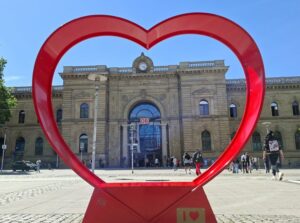
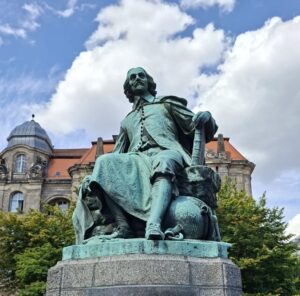
The venue is Magdeburg, the capital of the state Saxony-Anhalt. This city, with over 1,200 years of history, combines significant scientific traditions – such as the work of Otto von Guericke – with a modern research landscape. Magdeburg is conveniently located on the Elbe River and has excellent connections to the German long-distance rail network; direct ICE connections are available to cities including Berlin, Hanover, and Leipzig. From the main train station, most destinations in the city can be reached in just a few minutes.
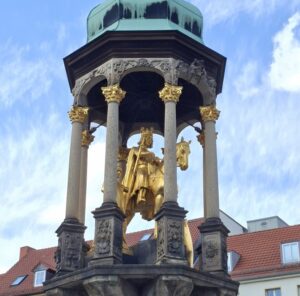
In the city center, you can stumble upon the historic cathedral right next to the Hundertwasser House. When spring arrives, the fresh green of the trees that seem to grow right out of the building gives it a special charm. The ancient cathedral, built from 1209 to 1520, invites you to linger in its vast hall. Just around the corner are the old Monastery of Our Lady, the market square with the Golden Rider statue, and the Natural History Museum. It’s never far to take a short stroll down to the Elbe River. If you follow it a little way south, you’ll discover a historic railway bridge and the Gruson Greenhouses. A little north of the city center lies the so-called Lukasklause, with the Otto von Guericke Museum right on the riverbank.
Magdeburg – a Center of Neuroscience
Over the past decades, the city of Magdeburg has developed into an internationally renowned center for neuroscience, where basic research, clinical application, and methodological innovation are closely intertwined. Key drivers of this development are the Otto von Guericke University Magdeburg, with its focus on cognitive and systems neuroscience; the Leibniz Institute for Neurobiology (LIN), dedicated to researching learning and memory across the lifespan; and the University Hospital Magdeburg, which translates experimental findings into diagnostic and therapeutic concepts. This profile is further enhanced by the presence of the German Center for Neurodegenerative Diseases (DZNE), which investigates neurodegenerative processes and their translation into prevention and treatment strategies. This close collaboration between university research, non-university institutes, and clinical practice creates an interdisciplinary environment characterized by modern imaging, computational neuroscience, and behavioral science approaches, positioning Magdeburg as a high-performing hub within the European neuroscience landscape.
One thing that unites all neuroscientists in the city is the Center for Behavioral Brain Sciences (CBBS). Founded in 2007, the CBBS integrates all relevant research areas with its methodology and technology platforms and coordinates their further development. The associated graduate program focuses particularly on supporting early-career researchers.
Herrenkrug – Meetings in a Green Setting
Our conference will be held at the Herrenkrug Parkhotel Magdeburg, a traditional hotel in a tranquil location within the historic Herrenkrug Park. Surrounded by the expansive Elbe meadows, the location offers a unique combination of a focused work environment and a natural setting. At the same time, the city center is easily accessible by tram.
Getting There
By train: Direct long-distance train connections to Magdeburg Central Station; from there, take tram line 6 to „Herrenkrug“.
By plane: International flights are available via Berlin Brandenburg Airport (BER), Hanover Airport (HAJ), or Leipzig/Halle Airport (LEJ), followed by a train connection to Magdeburg (approx. 1–2 hours).
By car: Easily accessible via the A2 and A14 motorways; parking is available at the hotel.
Please check also our information on travel and housing.
contact
Dr. Dana Zöllner
isync2@ovgu.de
+49 (0) 391 – 6755104